Designing for Every Learner
Preventing Sexual Harassment Course
The Preventing Sexual Harassment course was the first airline-industry-specific course covering difficult situations across job roles, including corporate roles, flight attendants, pilots, and ramp agents.
This course won 1st place in Diversity & Inclusion as part of ATD’s AXIS awards!
My design approach for this course was focused on providing as many examples as I could on how to manage and report unwanted behavior.
Three key areas made up the bulk of the effort in creating the eLearning: identifying legal requirements, writing relevant scenarios, and designing characters.
🔎 Select the images to zoom in.
I identified common sexual harassment scenarios through news stories and training guidelines from the U.S. Equal Employment Opportunity Commission.
A key part of this effort involved pulling news stories about incidents on aircraft and at the airport to tie them into our work group-specific scenarios.
Because the topic is sensitive, it was important that learners could find meaning in the prevention and reporting examples provided. To achieve this, I created characters with airline-specific job roles in airline-specific work environments—something that hadn’t been done in the industry yet.
Custom Inclusion Video
As part of the DEI program strategy at a home loan organization, I designed a custom inspirational video on the organization’s DEI mission.
I worked directly with stakeholders to write the narration and fine-tune it to the organization’s brand and voice. I then recorded and edited audio using Adobe Audition and developed the video in Adobe Premiere Pro.
Accessibility in My
Learning Design
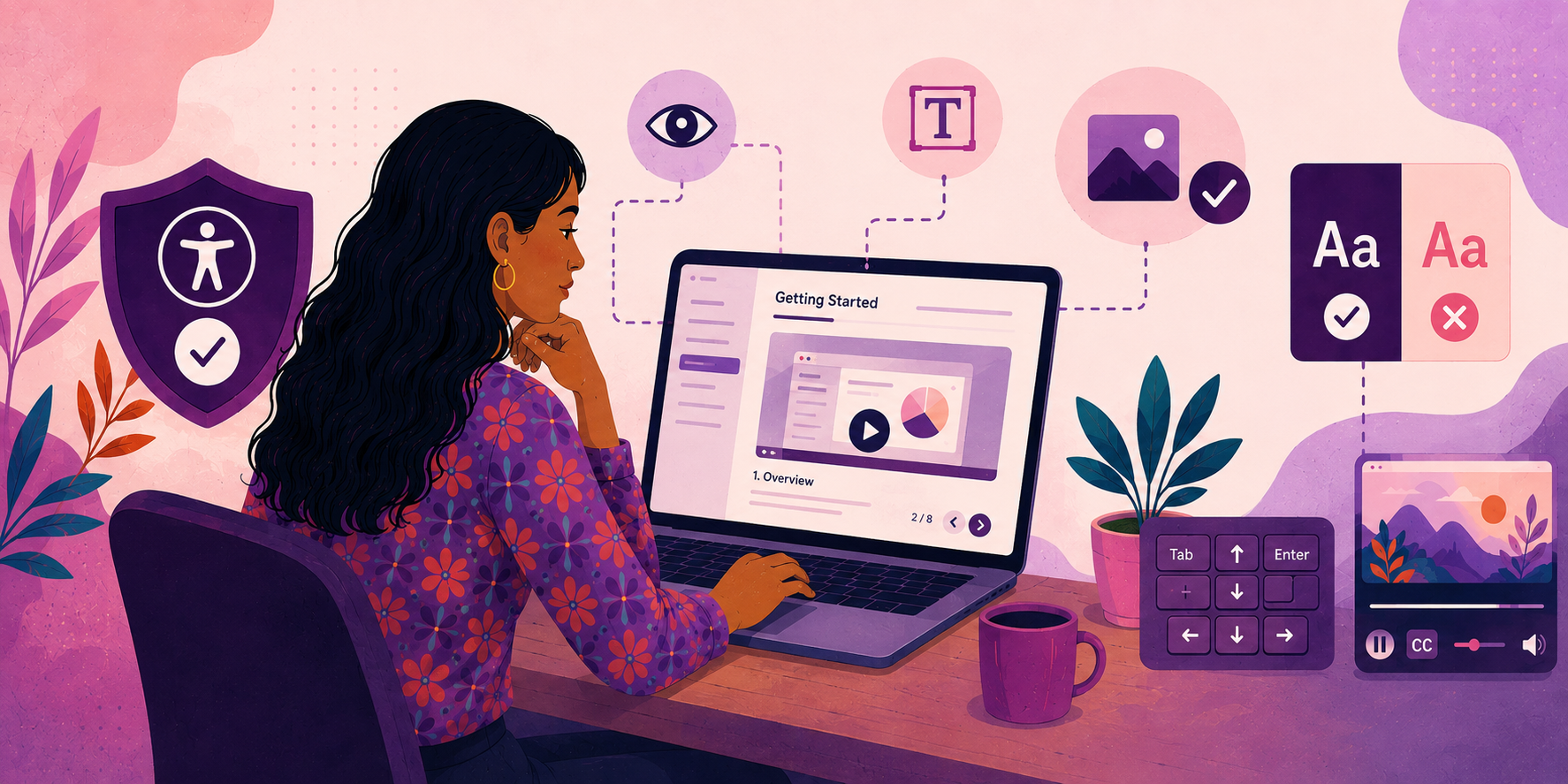
I follow WCAG whenever possible.
1
I build accessibility into my design process from the start, rather than treating it as an afterthought.
I make video accessible.
2
I provide accurate closed captions and transcripts so learners can choose how they engage with content. I avoid unnecessary motion and auto-playing content, while providing controls to adjust media when appropriate.
I don’t rely on color alone.
3
I use labels, icons, patterns, and other visual cues so information isn’t communicated through color alone.
I use inclusive language and imagery.
4
I represent a range of identities, abilities, experiences, and perspectives thoughtfully and without relying on stereotypes.